Why Pool Builders Abandon Buildertrend (And What They Do Next)
An honest field-notes piece on why mid-size pool construction companies keep churning out of the most popular construction PM platform on the market.
It is a Tuesday morning. A pool builder running 30 active projects opens his laptop, opens the Buildertrend dashboard, then opens the Excel spreadsheet next to it. The Excel has the actual project status. Buildertrend has the project status the team was supposed to update. The two have not matched in three weeks. He picks up the phone, calls his most senior PM, and asks the question he already knows the answer to: are we using Buildertrend? Pause. We are using it for the change orders. The 4-month implementation is over. The platform did not stick.
This scene is not a one-off. It is the mode of every conversation we have with pool builders evaluating the best Buildertrend alternative for pool builders. Tens of thousands of mid-size construction companies bought Buildertrend after a referral, after a trade show, after a CoConstruct migration nobody asked for, and watched their teams quietly stop using it. The platform is not bad. The platform is genuinely powerful for the right customer. Pool builders are not that customer.
This piece walks through why pool builders specifically keep abandoning Buildertrend, what the three walls are that nobody talks about until they hit them, the CoConstruct migration question that has gotten more urgent in the last 18 months, and what the next step actually looks like for builders who are ready to move on without making the same mistake twice.
Why Buildertrend Fails Pool Builders Specifically
Buildertrend is not a bad platform. They have one of the largest user communities in construction software, a deep change-order workflow, mature client portal functionality, and an extensive training infrastructure (Buildertrend University, 500-plus blog posts, an active community forum). For the right customer, typically a custom home builder running 8 to 15 simultaneous builds with high change-order volume, Buildertrend is genuinely good. Pool builders are not the right customer.
The Three Walls Pool Builders Hit
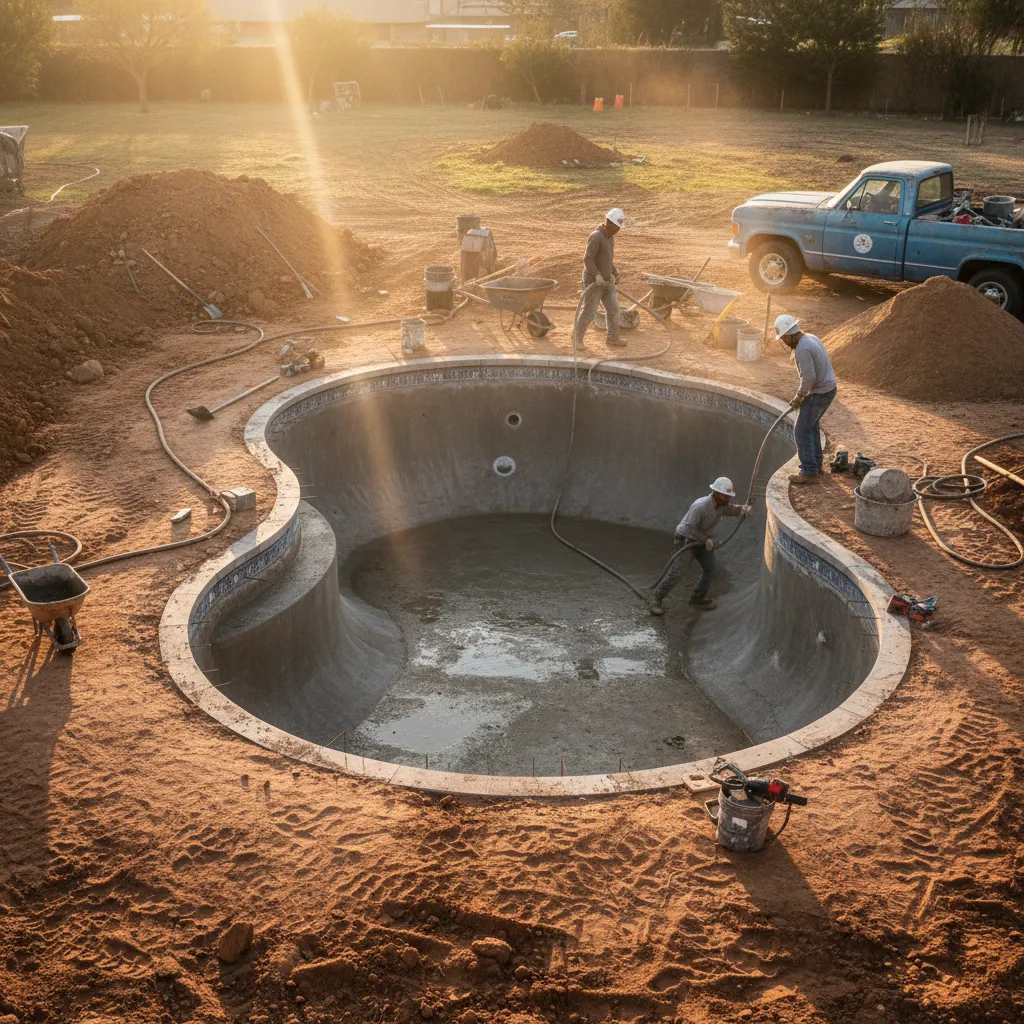
Wall 1: No phase-based lifecycle for pool construction. Pool builds move through a specific phase pipeline: Permitting, Staging, Production, Punch Outs, Warranty. Each phase has compliance requirements, customer-communication touchpoints, financial-draw triggers, and sub-assignment patterns specific to it. Buildertrend was designed around residential custom home construction, where the lifecycle is different and longer. Pool builders end up bending Buildertrend project structures into a shape that does not fit, or running their actual phases on a whiteboard while Buildertrend holds aspirational data.
Wall 2: Per-user pricing that scales against your growth. Buildertrend uses per-user enterprise pricing. As a pool builder grows from 10 employees to 25, the bill grows proportionally. The same growth that makes the platform more valuable (more PMs, more salespeople, more visibility-needers) makes it more expensive at exactly the rate you would not choose. Pool builders typically scale faster than custom home builders during peak season (60-plus simultaneous builds during spring), and the pricing model penalizes that growth.
Wall 3: No subcontractor compliance management. Buildertrend has a sub portal. The sub portal is positioned as communication: a place to share schedules, work orders, and messages. It is not positioned as compliance. There is no color-coded health dashboard, no automatic COI expiration alerts, no rule that blocks work orders to subs whose insurance has lapsed. For pool builders, where sub compliance failures can mean five-figure to six-figure liability incidents, the absence of compliance enforcement is the most expensive non-feature on the platform.
The 6 to 12 Month Onboarding Tax
Even if pool builders could absorb the three walls, the onboarding tax is structurally hard to swallow. Buildertrend's training infrastructure exists because the platform requires it. Most teams report 6 to 12 months to reach productive adoption. For a pool construction company in peak spring season managing 40-plus active builds, dedicating 4 to 6 hours per week per PM to Buildertrend training for 6 months is a real productivity cost, not a hypothetical one. The platform is good. The runway to get there is long. Pool builders typically do not have it.
Training infrastructure exists because the platform requires it. WFP designed itself to not need a Buildertrend University.
The CoConstruct Migration Problem
There is a second wedge that has gotten more urgent in the last 18 months. CoConstruct, a competing construction PM platform, was acquired by Buildertrend and effectively sunset. Existing CoConstruct users have been force-migrated to Buildertrend. They did not choose Buildertrend. They were chosen for it. The conversation in pool builder Facebook groups and Reddit threads is consistent: I was on CoConstruct and I liked it, now I am on Buildertrend and I do not, and I am not sure what to do about it. The forced migration is not a hypothetical. Tens of thousands of small and mid-size builders are in this position right now.
What Force-Migrated Users Are Allowed To Want
The implicit message of a forced migration is absorb the change, the new platform is just as good or better. For some users, that has been true. For pool builders specifically, it has not. The same three walls that drove pre-CoConstruct pool builders to abandon Buildertrend now apply to the migrated cohort. They have permission to evaluate alternatives. They had permission the moment the migration happened. Many have not used it because they assumed the migration was final.
If your team did not choose Buildertrend, you do not have to stay. Force-migration is a switching trigger, not a contract.
What Pool Builders Actually Need From Construction Software
Step back from the Buildertrend conversation for a moment. What does the construction PM software for a 12 to 50 person pool builder actually need to do? Most evaluations get this wrong by leading with feature checklists. Pool builders should evaluate adoption, then capability, then cost. In that order.
Phase-Based Workflow Built for Pool Construction
The phase pipeline (Permitting, Staging, Production, Punch Outs, Warranty) is not just a way to label projects. It is the operational reality of how pool projects move. Each phase has compliance requirements (permit windows, inspection holds), draw triggers (gunite draw at the gunite phase, finish draw at interior finish), and sub-assignment patterns (excavator at staging, gunite at production, plaster at finish). A platform that does not understand the lifecycle cannot automate it. A platform that cannot automate it forces PMs to be the automation, and the platform becomes a place to type data instead of a system that helps run the operation. The /features/project-management page walks through the pipeline in detail.
Subcontractor Compliance With Real Enforcement
The single most expensive failure mode for a pool builder is an uninsured-sub liability incident. The math is well-documented: one incident can cost $10,000 to $500,000-plus in legal exposure. Compliance management is the hedge against that math. A platform that tracks COIs but does not enforce them at the work-order level is not compliance management, it is record-keeping. The WFP color-coded health dashboard with expiration alerts and work-order blocking, documented at /features/subcontractor-management, is the kind of feature that pays for the platform in one avoided incident.
Draw Management Tied to Pool Build Phases
Pool builds are typically billed in milestone draws: contract signing, gunite, interior finish, punch out completion. The draws are tied to specific construction phases. A platform that handles generic invoices but does not handle milestone-driven draws against pool phases makes the bookkeeper rebuild the invoicing logic in QuickBooks. The right tool ties the draw schedule to the phase pipeline. The financial workflow is detailed at /features/financial-management.
Customer Communication for the 8 to 12 Week Build Window
Pool customers expect a level of communication that custom home customers do not. The build window is 8 to 12 weeks (sometimes 4 to 6 with WFP-built operations), the homeowner is watching from the kitchen window every day, and the cost of three bad reviews from poor communication is well-documented at $300,000-plus in lost referrals per year. The customer portal and automated SMS update infrastructure has to be built around the residential homeowner experience, not around the commercial-owner-rep experience that Buildertrend tends to default to.
How to Evaluate Alternatives Without Making the Same Mistake Twice
Pool builders who churned out of Buildertrend often hesitate to commit to the next platform because the failure was expensive. Three principles help avoid the same pattern.
Evaluate Adoption Before Features
Most evaluations focus on feature checklists. Buildertrend's failure for pool builders was rarely a missing feature. It was that the platform took 6 to 12 months to adopt. Adoption is a feature, the most important one. Ask: how long to load three real projects? How long for a PM to start using it on day-of-the-week workflows? How long for a sub to receive their first work order? If the answers are measured in months, the platform will not adopt for a peak-season pool builder.
Evaluate Construction-Specific Concepts
Generic project management has a different vocabulary than construction. Construction has phases, draws, work orders, COIs, punch outs, warranty claims, municipalities, permits, inspections. A platform that has these concepts as first-class objects (not as configurable custom fields) will fit construction work without being bent into shape. Bent platforms get abandoned.
Evaluate Pricing Structure, Not Just Price
Per-user enterprise pricing penalizes the growth that the platform is supposed to enable. Flat pricing with unlimited users (the WFP model) means the bill does not change as the team scales. This shifts the platform from a cost line that fights growth to a fixed cost that scales with operational leverage. The math gets very different at 25 users. The full side-by-side breakdown lives at /vs/buildertrend.
If your platform pricing fights your growth, your platform is not ready for your business.
Key Takeaways
- Pool builders consistently hit three walls on Buildertrend: no phase-based pool lifecycle, per-user pricing that penalizes growth, and no subcontractor compliance enforcement.
- The 6 to 12 month onboarding tax that Buildertrend's training infrastructure compensates for is structurally hard to absorb during peak pool-construction season.
- Force-migrated CoConstruct users have permission to evaluate alternatives. The migration was a switching trigger, not a contract.
- Evaluate adoption before features. The most expensive failure mode is buying a powerful platform that takes 6 months to onboard onto a team that needs to be productive next month.
- WFP was built inside a pool construction company. The phase pipeline, the compliance enforcement, the draw management, and the customer portal are designed for the pool-builder reality, not configured for it.
See a Platform Built by Someone Who Actually Built Pools.
Bring three real projects to a demo. We will show you what your morning looks like with WFP, and we will be honest about whether it is the right fit. No 6-month onboarding. No per-user pricing surprises.
Schedule a DemoNo 6-month onboarding commitment. No per-seat pricing. Just a conversation about how your operation could run.
Related Articles
WFP vs Buildertrend
An honest, head-to-head comparison written by builders who actually used Buildertrend, abandoned it, and built the alternative.
Read more
How to Manage Multiple Construction Projects
A working playbook for builders running 15 plus active jobs, written by people who have actually run 60.
Read more
For Pool Builders
The construction OS built specifically for pool construction companies running 20 plus simultaneous builds.
Read more